Services

Industries

Company

Suction vs Discharge Pipes in Pump Systems

Suction vs Discharge Pipes in Pump Systems

(01)

Suction and discharge pipes play distinct and critical roles in pump systems. Understanding their differences is essential for proper pump performance, reliability, and long-term operation. Correct design and installation of both piping sections help prevent cavitation, reduce energy loss, and ensure stable fluid flow.

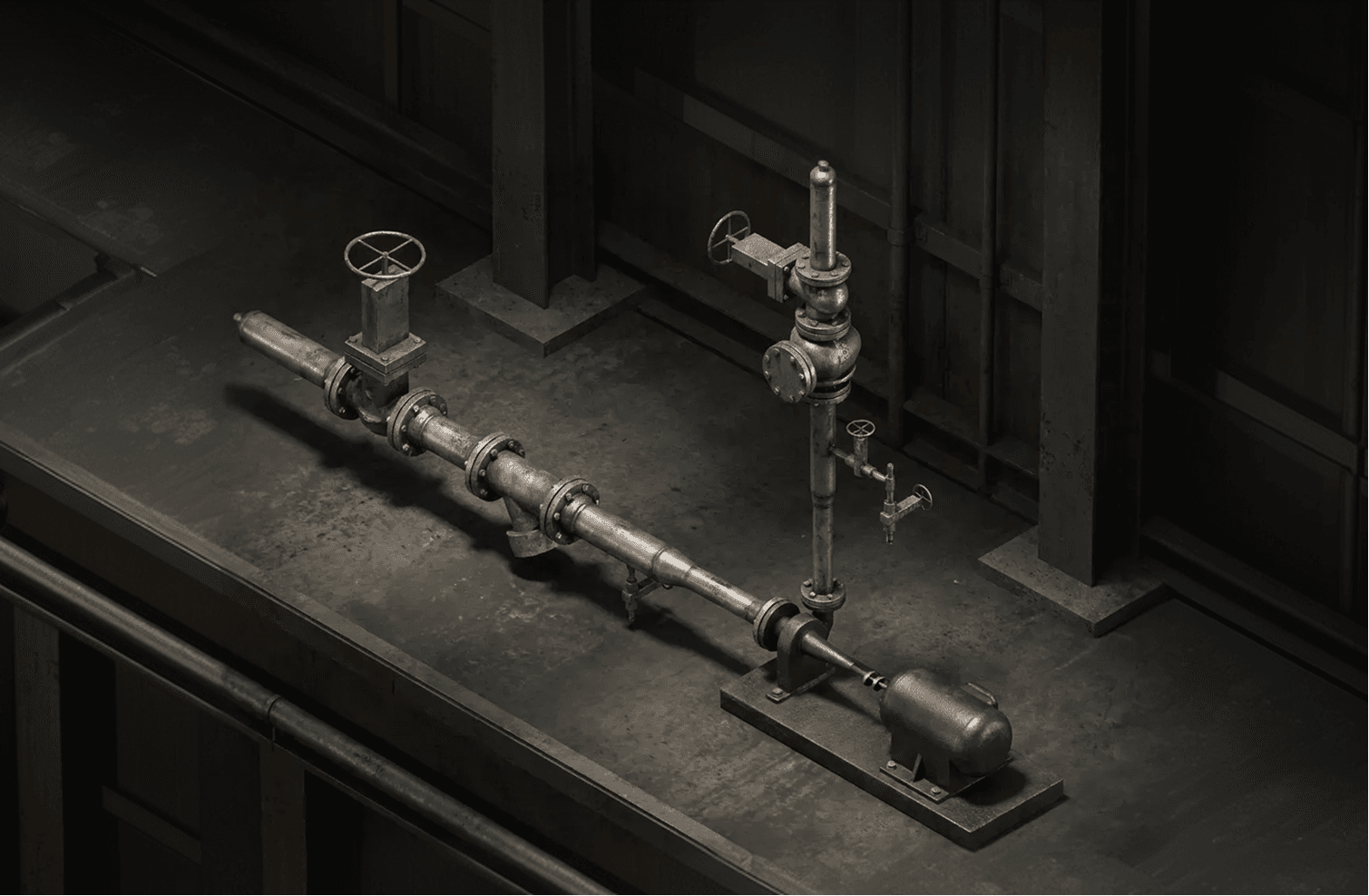
A close up of pipes and pipes in front of a tree

Understanding the Role of Suction and Discharge Piping

In any pump system, fluid enters through the suction pipe and exits through the discharge pipe. Although both are connected to the same pump, their design principles differ significantly due to pressure conditions, flow behavior, and operational requirements. Treating them as interchangeable can lead to performance issues and premature equipment failure.

Understanding the Role of Suction and Discharge Piping

In any pump system, fluid enters through the suction pipe and exits through the discharge pipe. Although both are connected to the same pump, their design principles differ significantly due to pressure conditions, flow behavior, and operational requirements. Treating them as interchangeable can lead to performance issues and premature equipment failure.

Understanding the Role of Suction and Discharge Piping

In any pump system, fluid enters through the suction pipe and exits through the discharge pipe. Although both are connected to the same pump, their design principles differ significantly due to pressure conditions, flow behavior, and operational requirements. Treating them as interchangeable can lead to performance issues and premature equipment failure.

Suction Pipe: Purpose and Design Considerations

The suction pipe is responsible for drawing fluid into the pump. To minimize pressure losses and avoid cavitation, suction piping is generally designed with a larger diameter than the discharge pipe. The pipe is typically installed with a slight upward slope toward the pump, allowing trapped air to move away from the suction line.

For systems handling potable water, a strainer is often installed to prevent debris from entering the pump. When negative suction conditions exist, a downward elbow may be used at the pump inlet. Eccentric reducers are preferred on suction lines to prevent air pockets, and an isolation valve is installed to allow maintenance without draining the entire system.

Suction Pipe: Purpose and Design Considerations

The suction pipe is responsible for drawing fluid into the pump. To minimize pressure losses and avoid cavitation, suction piping is generally designed with a larger diameter than the discharge pipe. The pipe is typically installed with a slight upward slope toward the pump, allowing trapped air to move away from the suction line.

For systems handling potable water, a strainer is often installed to prevent debris from entering the pump. When negative suction conditions exist, a downward elbow may be used at the pump inlet. Eccentric reducers are preferred on suction lines to prevent air pockets, and an isolation valve is installed to allow maintenance without draining the entire system.

Suction Pipe: Purpose and Design Considerations

The suction pipe is responsible for drawing fluid into the pump. To minimize pressure losses and avoid cavitation, suction piping is generally designed with a larger diameter than the discharge pipe. The pipe is typically installed with a slight upward slope toward the pump, allowing trapped air to move away from the suction line.

For systems handling potable water, a strainer is often installed to prevent debris from entering the pump. When negative suction conditions exist, a downward elbow may be used at the pump inlet. Eccentric reducers are preferred on suction lines to prevent air pockets, and an isolation valve is installed to allow maintenance without draining the entire system.

Discharge Pipe: Purpose and Design Considerations

The discharge pipe carries fluid away from the pump under pressure. Because pressure is higher on the discharge side, the pipe diameter is usually smaller than the suction pipe. Concentric reducers are commonly used, as air entrapment is not a concern in pressurized flow.

Discharge piping typically includes a non-return (check) valve to prevent backflow and protect the pump. An isolation valve is installed downstream of the non-return valve for operational control and maintenance. In many systems, an air valve is added to release trapped air and prevent pressure surges. Discharge piping is usually routed at a higher elevation than the suction line to suit system layout and flow requirements.

Discharge Pipe: Purpose and Design Considerations

The discharge pipe carries fluid away from the pump under pressure. Because pressure is higher on the discharge side, the pipe diameter is usually smaller than the suction pipe. Concentric reducers are commonly used, as air entrapment is not a concern in pressurized flow.

Discharge piping typically includes a non-return (check) valve to prevent backflow and protect the pump. An isolation valve is installed downstream of the non-return valve for operational control and maintenance. In many systems, an air valve is added to release trapped air and prevent pressure surges. Discharge piping is usually routed at a higher elevation than the suction line to suit system layout and flow requirements.

Discharge Pipe: Purpose and Design Considerations

The discharge pipe carries fluid away from the pump under pressure. Because pressure is higher on the discharge side, the pipe diameter is usually smaller than the suction pipe. Concentric reducers are commonly used, as air entrapment is not a concern in pressurized flow.

Discharge piping typically includes a non-return (check) valve to prevent backflow and protect the pump. An isolation valve is installed downstream of the non-return valve for operational control and maintenance. In many systems, an air valve is added to release trapped air and prevent pressure surges. Discharge piping is usually routed at a higher elevation than the suction line to suit system layout and flow requirements.

Key Differences in Operation and Function

The fundamental difference between suction and discharge pipes lies in pressure conditions. Suction piping operates under lower pressure and requires careful design to avoid flow disturbances, while discharge piping handles higher pressure and focuses on flow control and protection. Each section must be designed according to its function to ensure efficient and reliable pump operation.

Key Differences in Operation and Function

The fundamental difference between suction and discharge pipes lies in pressure conditions. Suction piping operates under lower pressure and requires careful design to avoid flow disturbances, while discharge piping handles higher pressure and focuses on flow control and protection. Each section must be designed according to its function to ensure efficient and reliable pump operation.

Key Differences in Operation and Function

The fundamental difference between suction and discharge pipes lies in pressure conditions. Suction piping operates under lower pressure and requires careful design to avoid flow disturbances, while discharge piping handles higher pressure and focuses on flow control and protection. Each section must be designed according to its function to ensure efficient and reliable pump operation.

Designing Pump Piping for Reliable Performance

Correct selection of pipe diameter, reducers, valves, and installation orientation ensures smooth pump operation and long service life. By understanding the distinct roles of suction and discharge piping, engineers can avoid common design mistakes and achieve stable, efficient pumping systems.

Designing Pump Piping for Reliable Performance

Correct selection of pipe diameter, reducers, valves, and installation orientation ensures smooth pump operation and long service life. By understanding the distinct roles of suction and discharge piping, engineers can avoid common design mistakes and achieve stable, efficient pumping systems.

Designing Pump Piping for Reliable Performance

Correct selection of pipe diameter, reducers, valves, and installation orientation ensures smooth pump operation and long service life. By understanding the distinct roles of suction and discharge piping, engineers can avoid common design mistakes and achieve stable, efficient pumping systems.

Explore More Insights

Explore More Insights

Explore More Insights

Have a similar project in mind? Let us know!

(04)

aerial view of industrial factory

Have a similar project in mind? Let us know!

(04)

aerial view of industrial factory

Have a similar project in mind? Let us know!

(04)

aerial view of industrial factory
black and orange power tool

Take the Next Step Toward Engineering Excellence.

From 3D scanning to ongoing asset management - We deliver end-to-end solutions that reduce costs and improve operational efficiency

Contact Us

+91 84481 79046

+971 58556 6837

info@sixdengineering.com

Connect

© 2024 SIXD India. All rights reserved

black and orange power tool

Take the Next Step Toward Engineering Excellence.

From 3D scanning to ongoing asset management - We deliver end-to-end solutions that reduce costs and improve operational efficiency

© 2024 SIXD India. All rights reserved

black and orange power tool

Take the Next Step Toward Engineering Excellence.

From 3D scanning to ongoing asset management - We deliver end-to-end solutions that reduce costs and improve operational efficiency

© 2024 SIXD India. All rights reserved

Suction vs Discharge Pipes in Pump Systems

Suction vs Discharge Pipes in Pump Systems

(01)

Suction and discharge pipes play distinct and critical roles in pump systems. Understanding their differences is essential for proper pump performance, reliability, and long-term operation. Correct design and installation of both piping sections help prevent cavitation, reduce energy loss, and ensure stable fluid flow.

A close up of pipes and pipes in front of a tree

Understanding the Role of Suction and Discharge Piping

In any pump system, fluid enters through the suction pipe and exits through the discharge pipe. Although both are connected to the same pump, their design principles differ significantly due to pressure conditions, flow behavior, and operational requirements. Treating them as interchangeable can lead to performance issues and premature equipment failure.

Understanding the Role of Suction and Discharge Piping

In any pump system, fluid enters through the suction pipe and exits through the discharge pipe. Although both are connected to the same pump, their design principles differ significantly due to pressure conditions, flow behavior, and operational requirements. Treating them as interchangeable can lead to performance issues and premature equipment failure.

Understanding the Role of Suction and Discharge Piping

In any pump system, fluid enters through the suction pipe and exits through the discharge pipe. Although both are connected to the same pump, their design principles differ significantly due to pressure conditions, flow behavior, and operational requirements. Treating them as interchangeable can lead to performance issues and premature equipment failure.

Suction Pipe: Purpose and Design Considerations

The suction pipe is responsible for drawing fluid into the pump. To minimize pressure losses and avoid cavitation, suction piping is generally designed with a larger diameter than the discharge pipe. The pipe is typically installed with a slight upward slope toward the pump, allowing trapped air to move away from the suction line.

For systems handling potable water, a strainer is often installed to prevent debris from entering the pump. When negative suction conditions exist, a downward elbow may be used at the pump inlet. Eccentric reducers are preferred on suction lines to prevent air pockets, and an isolation valve is installed to allow maintenance without draining the entire system.

Suction Pipe: Purpose and Design Considerations

The suction pipe is responsible for drawing fluid into the pump. To minimize pressure losses and avoid cavitation, suction piping is generally designed with a larger diameter than the discharge pipe. The pipe is typically installed with a slight upward slope toward the pump, allowing trapped air to move away from the suction line.

For systems handling potable water, a strainer is often installed to prevent debris from entering the pump. When negative suction conditions exist, a downward elbow may be used at the pump inlet. Eccentric reducers are preferred on suction lines to prevent air pockets, and an isolation valve is installed to allow maintenance without draining the entire system.

Suction Pipe: Purpose and Design Considerations

The suction pipe is responsible for drawing fluid into the pump. To minimize pressure losses and avoid cavitation, suction piping is generally designed with a larger diameter than the discharge pipe. The pipe is typically installed with a slight upward slope toward the pump, allowing trapped air to move away from the suction line.

For systems handling potable water, a strainer is often installed to prevent debris from entering the pump. When negative suction conditions exist, a downward elbow may be used at the pump inlet. Eccentric reducers are preferred on suction lines to prevent air pockets, and an isolation valve is installed to allow maintenance without draining the entire system.

Discharge Pipe: Purpose and Design Considerations

The discharge pipe carries fluid away from the pump under pressure. Because pressure is higher on the discharge side, the pipe diameter is usually smaller than the suction pipe. Concentric reducers are commonly used, as air entrapment is not a concern in pressurized flow.

Discharge piping typically includes a non-return (check) valve to prevent backflow and protect the pump. An isolation valve is installed downstream of the non-return valve for operational control and maintenance. In many systems, an air valve is added to release trapped air and prevent pressure surges. Discharge piping is usually routed at a higher elevation than the suction line to suit system layout and flow requirements.

Discharge Pipe: Purpose and Design Considerations

The discharge pipe carries fluid away from the pump under pressure. Because pressure is higher on the discharge side, the pipe diameter is usually smaller than the suction pipe. Concentric reducers are commonly used, as air entrapment is not a concern in pressurized flow.

Discharge piping typically includes a non-return (check) valve to prevent backflow and protect the pump. An isolation valve is installed downstream of the non-return valve for operational control and maintenance. In many systems, an air valve is added to release trapped air and prevent pressure surges. Discharge piping is usually routed at a higher elevation than the suction line to suit system layout and flow requirements.

Discharge Pipe: Purpose and Design Considerations

The discharge pipe carries fluid away from the pump under pressure. Because pressure is higher on the discharge side, the pipe diameter is usually smaller than the suction pipe. Concentric reducers are commonly used, as air entrapment is not a concern in pressurized flow.

Discharge piping typically includes a non-return (check) valve to prevent backflow and protect the pump. An isolation valve is installed downstream of the non-return valve for operational control and maintenance. In many systems, an air valve is added to release trapped air and prevent pressure surges. Discharge piping is usually routed at a higher elevation than the suction line to suit system layout and flow requirements.

Key Differences in Operation and Function

The fundamental difference between suction and discharge pipes lies in pressure conditions. Suction piping operates under lower pressure and requires careful design to avoid flow disturbances, while discharge piping handles higher pressure and focuses on flow control and protection. Each section must be designed according to its function to ensure efficient and reliable pump operation.

Key Differences in Operation and Function

The fundamental difference between suction and discharge pipes lies in pressure conditions. Suction piping operates under lower pressure and requires careful design to avoid flow disturbances, while discharge piping handles higher pressure and focuses on flow control and protection. Each section must be designed according to its function to ensure efficient and reliable pump operation.

Key Differences in Operation and Function

The fundamental difference between suction and discharge pipes lies in pressure conditions. Suction piping operates under lower pressure and requires careful design to avoid flow disturbances, while discharge piping handles higher pressure and focuses on flow control and protection. Each section must be designed according to its function to ensure efficient and reliable pump operation.

Designing Pump Piping for Reliable Performance

Correct selection of pipe diameter, reducers, valves, and installation orientation ensures smooth pump operation and long service life. By understanding the distinct roles of suction and discharge piping, engineers can avoid common design mistakes and achieve stable, efficient pumping systems.
Designing Pump Piping for Reliable Performance

Correct selection of pipe diameter, reducers, valves, and installation orientation ensures smooth pump operation and long service life. By understanding the distinct roles of suction and discharge piping, engineers can avoid common design mistakes and achieve stable, efficient pumping systems.
Designing Pump Piping for Reliable Performance

Correct selection of pipe diameter, reducers, valves, and installation orientation ensures smooth pump operation and long service life. By understanding the distinct roles of suction and discharge piping, engineers can avoid common design mistakes and achieve stable, efficient pumping systems.

Explore More Insights

Explore More Insights

Explore More Insights

Have a similar project in mind? Let us know!

(04)

aerial view of industrial factory

Have a similar project in mind? Let us know!

(04)

aerial view of industrial factory

Have a similar project in mind? Let us know!

(04)

aerial view of industrial factory
black and orange power tool

Take the Next Step Toward Engineering Excellence.

From 3D scanning to ongoing asset management - We deliver end-to-end solutions that reduce costs and improve operational efficiency

Contact Us

+91 84481 79046

+971 58556 6837

info@sixdengineering.com

Connect

© 2024 SIXD India. All rights reserved

black and orange power tool

Take the Next Step Toward Engineering Excellence.

From 3D scanning to ongoing asset management - We deliver end-to-end solutions that reduce costs and improve operational efficiency

© 2024 SIXD India. All rights reserved

black and orange power tool

Take the Next Step Toward Engineering Excellence.

From 3D scanning to ongoing asset management - We deliver end-to-end solutions that reduce costs and improve operational efficiency

© 2024 SIXD India. All rights reserved