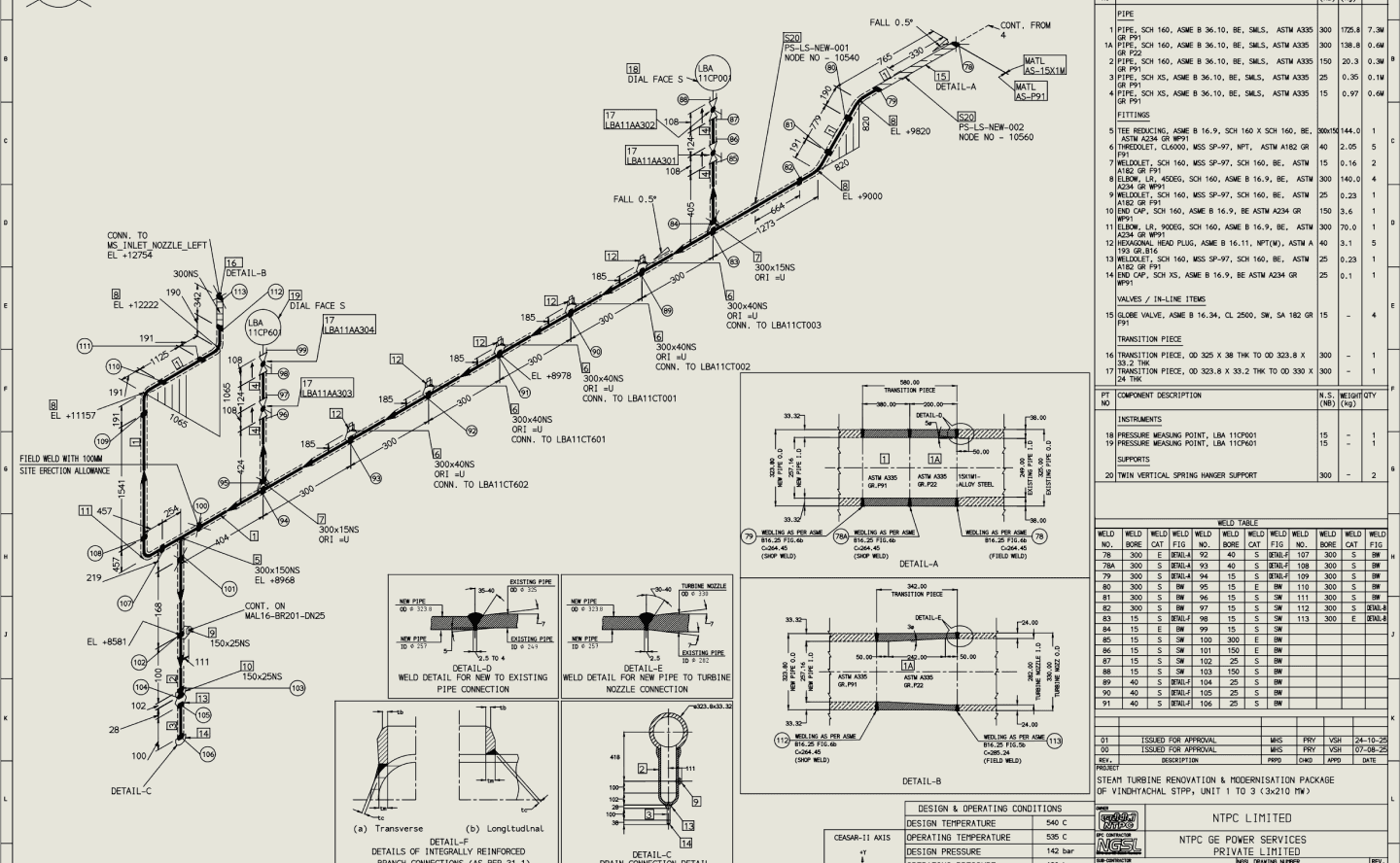
What Is an Isometric Drawing
An isometric drawing is a three-dimensional representation of a piping system, typically drawn using 30-degree angles to display length, width, and height in a single view. Unlike orthographic drawings, isometrics allow engineers and installers to visualize routing, fittings, and connections clearly, making them indispensable for fabrication and construction activities.
Isometric drawings commonly include piping geometry, component details, elevations, weld information, and material specifications—providing a complete snapshot of how a piping line is to be built and installed.
What Is an Isometric Drawing
An isometric drawing is a three-dimensional representation of a piping system, typically drawn using 30-degree angles to display length, width, and height in a single view. Unlike orthographic drawings, isometrics allow engineers and installers to visualize routing, fittings, and connections clearly, making them indispensable for fabrication and construction activities.
Isometric drawings commonly include piping geometry, component details, elevations, weld information, and material specifications—providing a complete snapshot of how a piping line is to be built and installed.
Checking Piping Dimensions and Routing
The first step in reviewing an isometric drawing is verifying pipe dimensions and routing. Pipe lengths, elevations, offsets, and bend angles must match design requirements. Where applicable, pipe slopes should be clearly indicated and maintained to support proper drainage or process flow. Incorrect routing or elevation errors can lead to installation conflicts and operational issues.
Checking Piping Dimensions and Routing
The first step in reviewing an isometric drawing is verifying pipe dimensions and routing. Pipe lengths, elevations, offsets, and bend angles must match design requirements. Where applicable, pipe slopes should be clearly indicated and maintained to support proper drainage or process flow. Incorrect routing or elevation errors can lead to installation conflicts and operational issues.
Verifying Pipe Size, Schedule, and Components
Pipe sizes and schedules should align with the specifications defined in the P&ID. Wall thickness must be appropriate for the operating pressure and temperature. All fittings—such as elbows, tees, reducers, and branches—should be correctly placed and oriented. Valve types, flange ratings, and gasket specifications must also be confirmed to ensure compatibility with process and safety requirements.
Verifying Pipe Size, Schedule, and Components
Pipe sizes and schedules should align with the specifications defined in the P&ID. Wall thickness must be appropriate for the operating pressure and temperature. All fittings—such as elbows, tees, reducers, and branches—should be correctly placed and oriented. Valve types, flange ratings, and gasket specifications must also be confirmed to ensure compatibility with process and safety requirements.
Flow Direction, Welds, and Joint Details
Flow direction indicators must be consistent with the P&ID, particularly for check valves and control valves that rely on correct orientation. Weld information should clearly identify weld numbers, joint types, and whether welds are to be completed in the shop or in the field. This distinction is essential for planning fabrication and installation sequences.
Flow Direction, Welds, and Joint Details
Flow direction indicators must be consistent with the P&ID, particularly for check valves and control valves that rely on correct orientation. Weld information should clearly identify weld numbers, joint types, and whether welds are to be completed in the shop or in the field. This distinction is essential for planning fabrication and installation sequences.
Supports, Insulation, and Equipment Connections
Pipe supports, anchors, guides, and hangers should be correctly positioned to manage load, vibration, and thermal expansion. Where required, spring hangers must be identified. Insulation and coating requirements should be clearly noted for temperature control and corrosion protection. Equipment connection points must match pump, compressor, or heat exchanger nozzles, with adequate allowance for expansion loops or flexible joints.
Supports, Insulation, and Equipment Connections
Pipe supports, anchors, guides, and hangers should be correctly positioned to manage load, vibration, and thermal expansion. Where required, spring hangers must be identified. Insulation and coating requirements should be clearly noted for temperature control and corrosion protection. Equipment connection points must match pump, compressor, or heat exchanger nozzles, with adequate allowance for expansion loops or flexible joints.
Tie-Ins, BOM, and Standards Compliance
Tie-in points should be clearly identified and referenced against existing drawings to avoid mismatches during installation. The Bill of Materials (BOM) must accurately list all pipes, fittings, valves, and accessories with correct grades and ratings. Finally, the drawing should comply with relevant ASME, ANSI, API, and project-specific standards, including any special testing or inspection notes.
Tie-Ins, BOM, and Standards Compliance
Tie-in points should be clearly identified and referenced against existing drawings to avoid mismatches during installation. The Bill of Materials (BOM) must accurately list all pipes, fittings, valves, and accessories with correct grades and ratings. Finally, the drawing should comply with relevant ASME, ANSI, API, and project-specific standards, including any special testing or inspection notes.