What a Process Flow Diagram (PFD) Represents
A Process Flow Diagram (PFD) provides a high-level overview of how a process operates. It focuses on the overall flow of materials and energy through a plant rather than detailed engineering information. PFDs typically illustrate major equipment such as reactors, heat exchangers, pumps, and compressors, along with the direction of process streams connecting them.
In addition to equipment, PFDs may include basic operating conditions such as temperature, pressure, and flow rates, as well as simplified control loops. Because of this broad perspective, PFDs are primarily used during early design stages to understand process logic, evaluate alternatives, and optimize system performance.
What a Process Flow Diagram (PFD) Represents
A Process Flow Diagram (PFD) provides a high-level overview of how a process operates. It focuses on the overall flow of materials and energy through a plant rather than detailed engineering information. PFDs typically illustrate major equipment such as reactors, heat exchangers, pumps, and compressors, along with the direction of process streams connecting them.
In addition to equipment, PFDs may include basic operating conditions such as temperature, pressure, and flow rates, as well as simplified control loops. Because of this broad perspective, PFDs are primarily used during early design stages to understand process logic, evaluate alternatives, and optimize system performance.
What a Piping & Instrumentation Diagram (P&ID) Represents
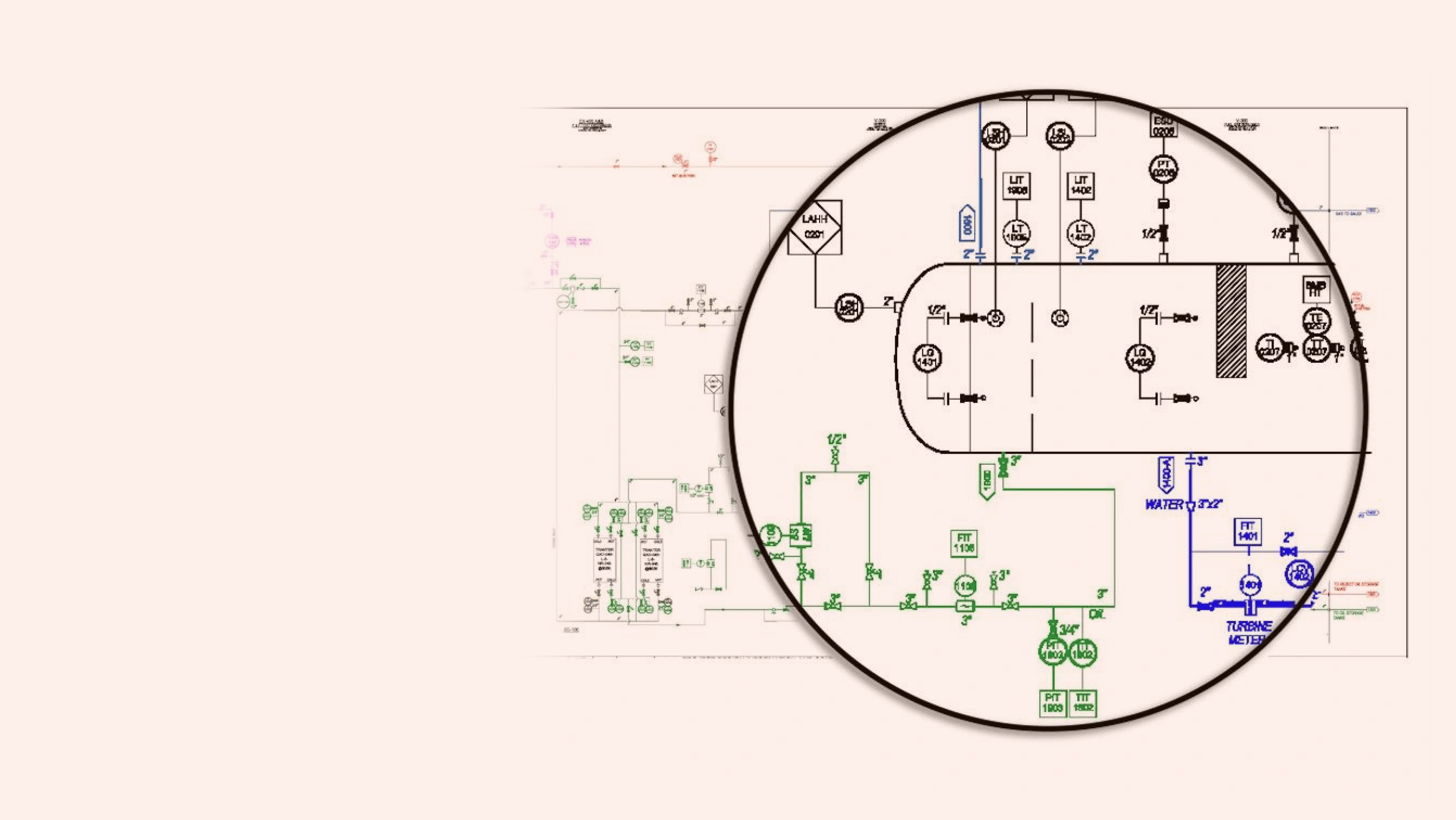
A Piping and Instrumentation Diagram (P&ID) takes the process further by providing detailed information required for engineering, procurement, construction, and operation. It includes every pipe, valve, fitting, instrument, and control loop within the system. Pipe sizes, material specifications, insulation requirements, and tagging details are all clearly defined.
P&IDs also capture safety systems such as relief valves, emergency shutdowns, alarms, and interlocks. Because of this depth, P&IDs act as the primary reference document during installation, commissioning, troubleshooting, and long-term plant maintenance.
What a Piping & Instrumentation Diagram (P&ID) Represents
A Piping and Instrumentation Diagram (P&ID) takes the process further by providing detailed information required for engineering, procurement, construction, and operation. It includes every pipe, valve, fitting, instrument, and control loop within the system. Pipe sizes, material specifications, insulation requirements, and tagging details are all clearly defined.
P&IDs also capture safety systems such as relief valves, emergency shutdowns, alarms, and interlocks. Because of this depth, P&IDs act as the primary reference document during installation, commissioning, troubleshooting, and long-term plant maintenance.
Key Differences Between PFD and P&ID
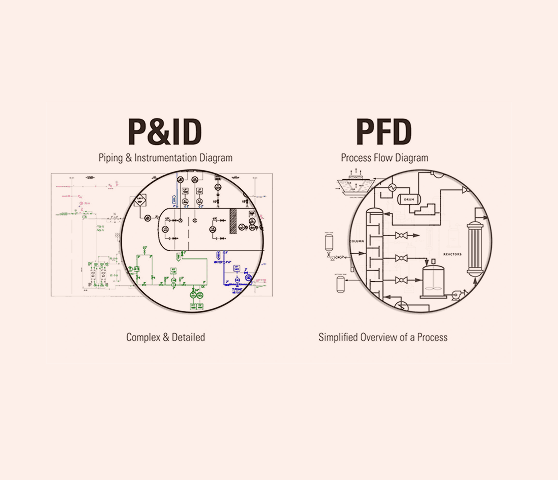
The main difference lies in detail and intent. A PFD explains how the process works, while a P&ID explains how the process is built and controlled. PFDs are simplified and conceptual, whereas P&IDs are comprehensive and execution-focused. Together, they form the backbone of process engineering documentation.
Key Differences Between PFD and P&ID
The main difference lies in detail and intent. A PFD explains how the process works, while a P&ID explains how the process is built and controlled. PFDs are simplified and conceptual, whereas P&IDs are comprehensive and execution-focused. Together, they form the backbone of process engineering documentation.
How to Read PFDs and P&IDs Effectively
Reading both PFDs and P&IDs requires understanding their purpose and level of detail. Start with the PFD to grasp the overall process logic. Identify the major equipment such as reactors, pumps, heat exchangers, and follow the arrows to understand the direction of material and energy flow. Stream labels and numbers often link to operating conditions like temperature, pressure, and flow rates, helping readers understand how the process functions at a system level.
Once the process logic is clear, move to the P&ID for execution-level details. Locate the same equipment and trace individual piping routes, noting pipe sizes, material specifications, and flow directions. Identify valves, fittings, and instrumentation such as sensors, flow meters, and control valves. Pay close attention to control loops, interlocks, and safety systems—including relief valves and emergency shutdowns—which define how the plant is controlled and protected during operation.
Together, PFDs provide the big picture of how a process works, while P&IDs translate that logic into a detailed, buildable, and operable engineering blueprint.
How to Read PFDs and P&IDs Effectively
Reading both PFDs and P&IDs requires understanding their purpose and level of detail. Start with the PFD to grasp the overall process logic. Identify the major equipment such as reactors, pumps, heat exchangers, and follow the arrows to understand the direction of material and energy flow. Stream labels and numbers often link to operating conditions like temperature, pressure, and flow rates, helping readers understand how the process functions at a system level.
Once the process logic is clear, move to the P&ID for execution-level details. Locate the same equipment and trace individual piping routes, noting pipe sizes, material specifications, and flow directions. Identify valves, fittings, and instrumentation such as sensors, flow meters, and control valves. Pay close attention to control loops, interlocks, and safety systems—including relief valves and emergency shutdowns—which define how the plant is controlled and protected during operation.
Together, PFDs provide the big picture of how a process works, while P&IDs translate that logic into a detailed, buildable, and operable engineering blueprint.