Why As-Built Accuracy Matters
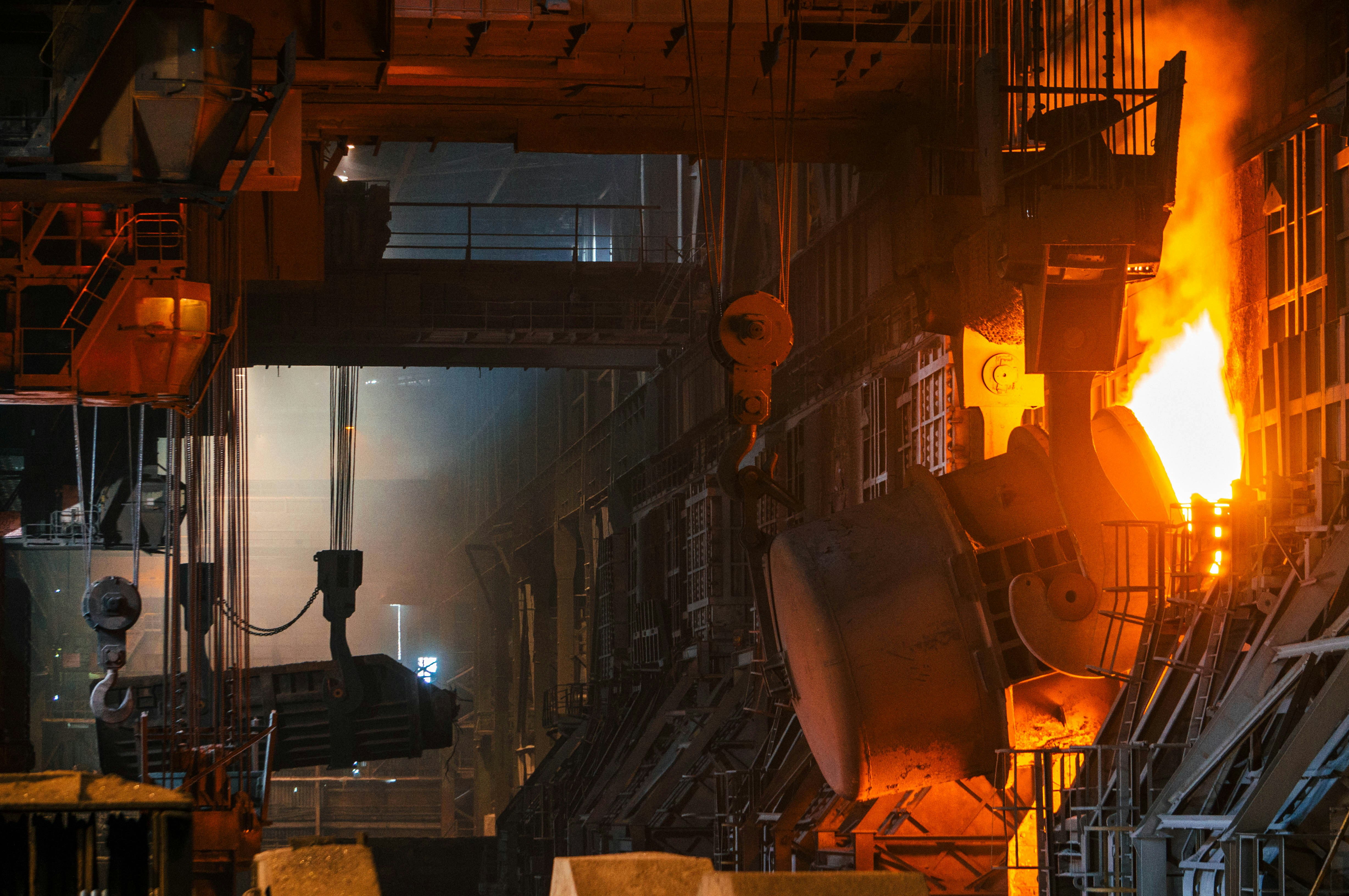
In brownfield and operating facilities, engineering challenges often stem from outdated drawings and undocumented site changes. Designing or retrofitting systems without accurate as-built information introduces risk, delays, and rework. As-built modeling addresses this gap by creating a reliable digital representation of existing conditions.
Why As-Built Accuracy Matters
In brownfield and operating facilities, engineering challenges often stem from outdated drawings and undocumented site changes. Designing or retrofitting systems without accurate as-built information introduces risk, delays, and rework. As-built modeling addresses this gap by creating a reliable digital representation of existing conditions.
Capturing Reality Through Point Clouds
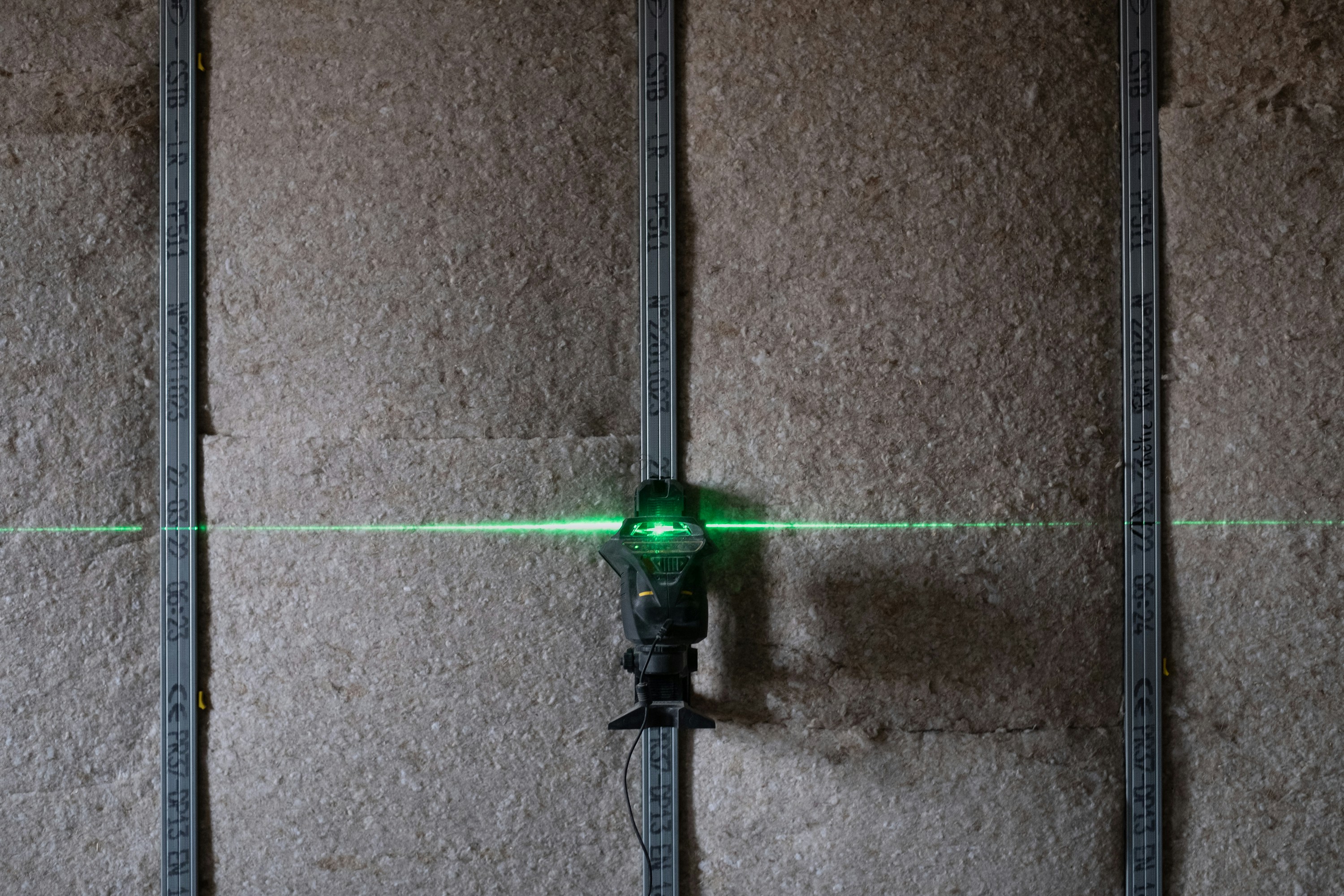
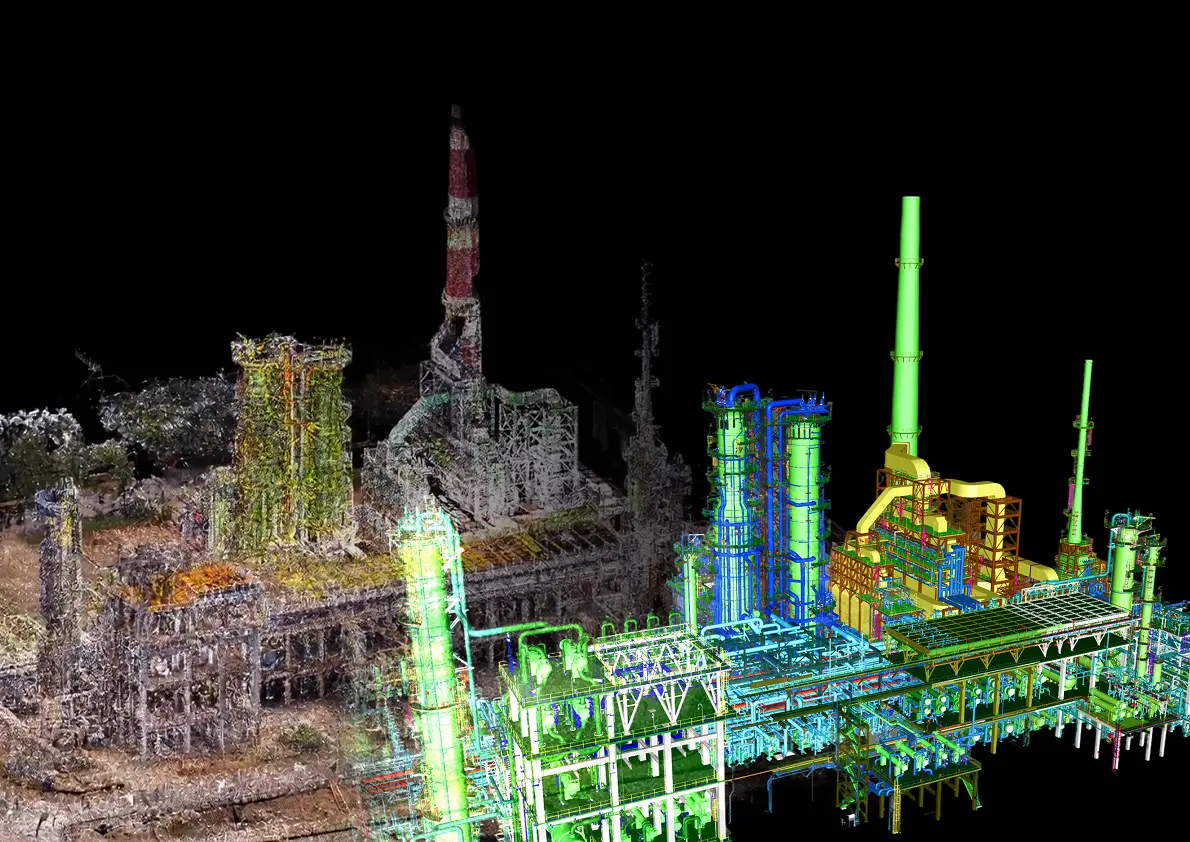
Laser scanning captures millions of spatial data points, forming a detailed point cloud of the site. This data reflects actual geometry, clearances, and relationships between equipment, piping, and structures—without interrupting ongoing operations. The result is a precise digital snapshot of the plant as it truly exists.
Capturing Reality Through Point Clouds
Laser scanning captures millions of spatial data points, forming a detailed point cloud of the site. This data reflects actual geometry, clearances, and relationships between equipment, piping, and structures—without interrupting ongoing operations. The result is a precise digital snapshot of the plant as it truly exists.
From Scan Data to As-Built Models
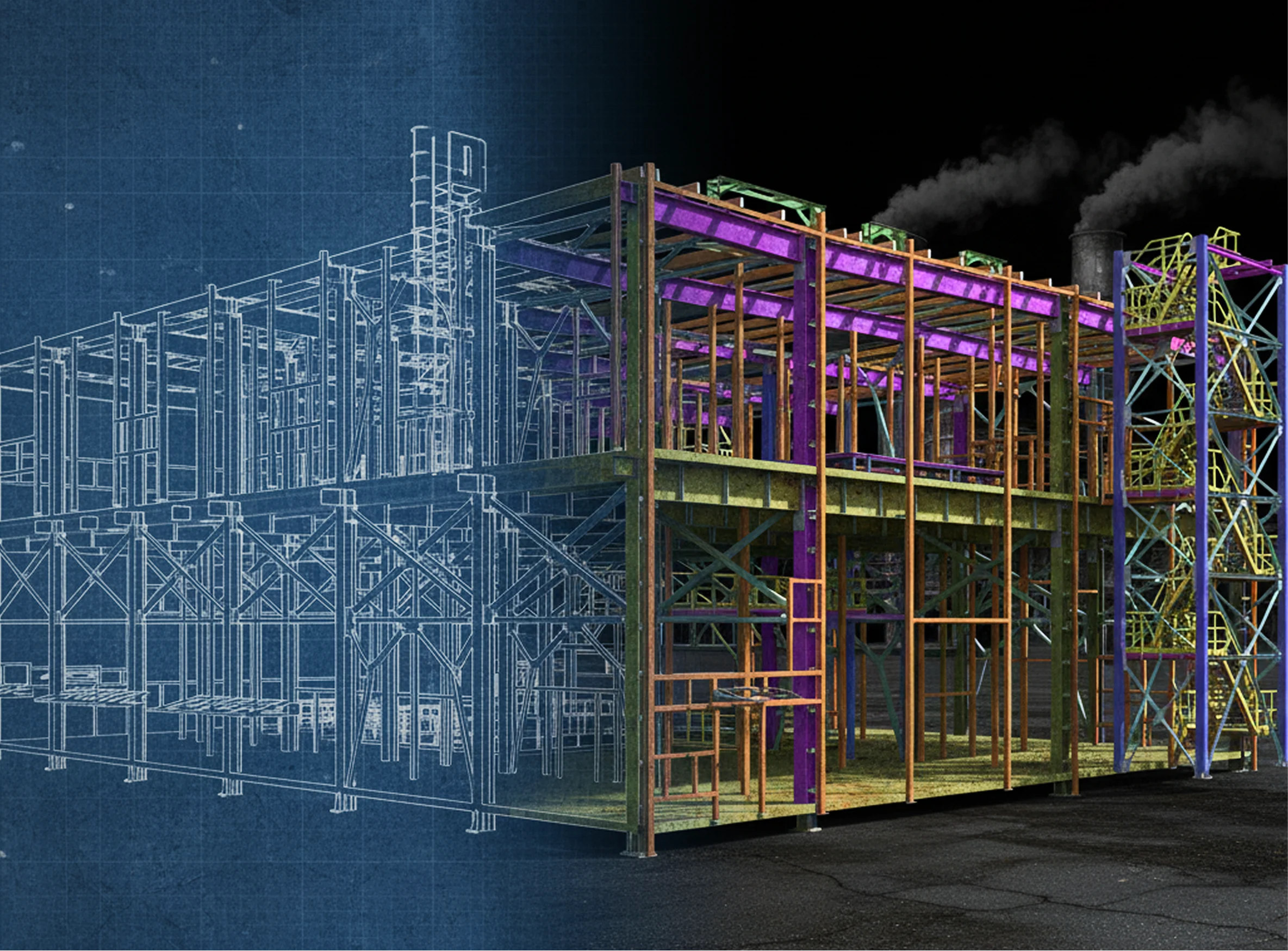
Point cloud data is interpreted and converted into structured 3D models using engineering platforms. These models accurately represent piping, equipment, structures, and spatial constraints, eliminating guesswork during design and planning. Engineers can verify dimensions, validate clearances, and assess constructability directly within the model.
From Scan Data to As-Built Models
Point cloud data is interpreted and converted into structured 3D models using engineering platforms. These models accurately represent piping, equipment, structures, and spatial constraints, eliminating guesswork during design and planning. Engineers can verify dimensions, validate clearances, and assess constructability directly within the model.
Supporting Brownfield and Live Projects
As-built models derived from point clouds play a critical role in retrofit and expansion projects. They support clash-free design, safer installation planning, and smoother coordination across disciplines—especially in congested or high-risk areas of live plants.
Supporting Brownfield and Live Projects
As-built models derived from point clouds play a critical role in retrofit and expansion projects. They support clash-free design, safer installation planning, and smoother coordination across disciplines—especially in congested or high-risk areas of live plants.
A Trusted Digital Representation of Reality
By aligning engineering decisions with verified site conditions, point cloud–based as-built modeling reduces uncertainty and improves project outcomes. The result is faster execution, fewer site issues, and a dependable digital foundation for future modifications and asset lifecycle management.
A Trusted Digital Representation of Reality
By aligning engineering decisions with verified site conditions, point cloud–based as-built modeling reduces uncertainty and improves project outcomes. The result is faster execution, fewer site issues, and a dependable digital foundation for future modifications and asset lifecycle management.