Introduction
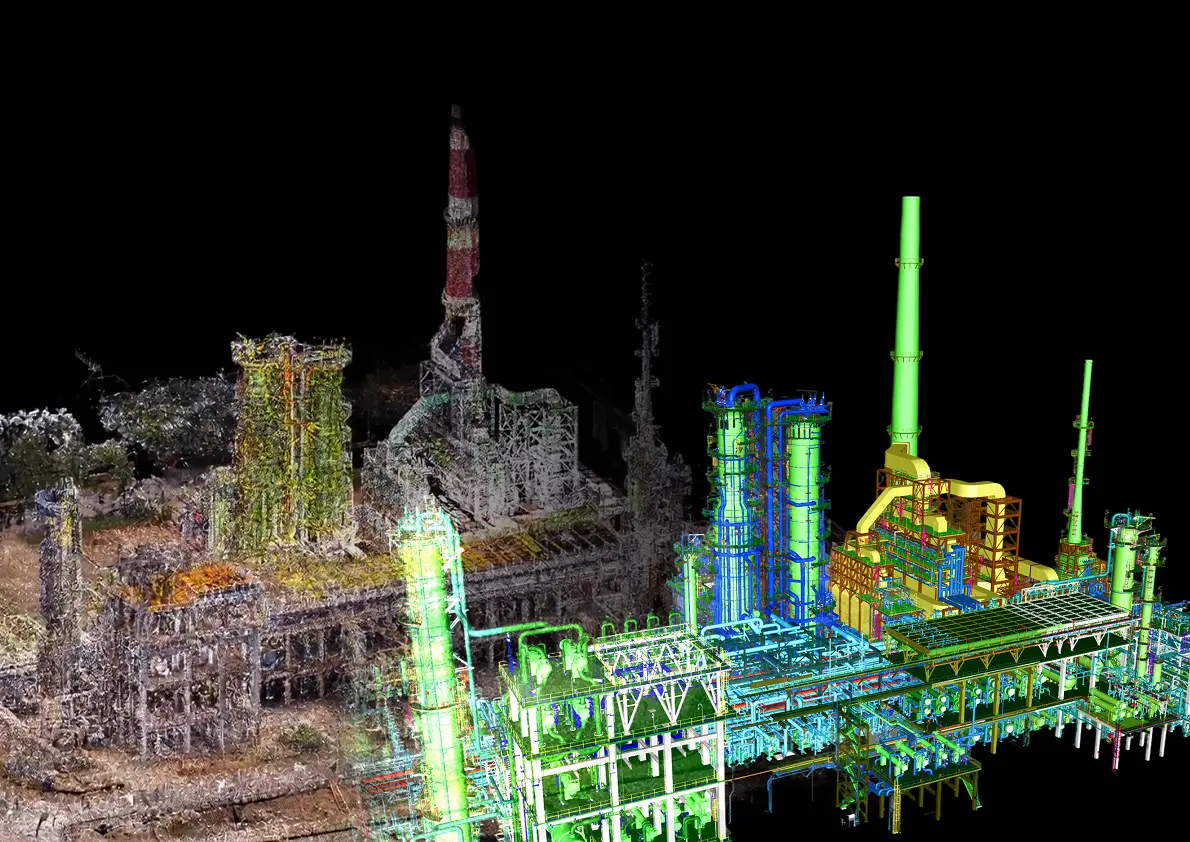
When a brownfield plant is scanned, the point cloud is only the beginning. The real value comes from choosing the right engineering deliverable: scan-to-CAD, scan-to-BIM, or an intelligent plant model that supports discipline-specific design work.
This choice matters because industrial teams rarely scan facilities for visualization alone. They need reliable outputs for revamps, shutdown planning, clash checks, piping changes, equipment replacement, asset documentation, or long-term digital transformation.
Searches for scan-to-CAD and scan-to-BIM often lead to building-focused explanations. Industrial plants need a more practical view: which output will support the actual engineering decision, with the right level of detail, accuracy, metadata, and maintainability?
Introduction
When a brownfield plant is scanned, the point cloud is only the beginning. The real value comes from choosing the right engineering deliverable: scan-to-CAD, scan-to-BIM, or an intelligent plant model that supports discipline-specific design work.
This choice matters because industrial teams rarely scan facilities for visualization alone. They need reliable outputs for revamps, shutdown planning, clash checks, piping changes, equipment replacement, asset documentation, or long-term digital transformation.
Searches for scan-to-CAD and scan-to-BIM often lead to building-focused explanations. Industrial plants need a more practical view: which output will support the actual engineering decision, with the right level of detail, accuracy, metadata, and maintainability?
Why the Deliverable Choice Matters
Brownfield facilities change over years of operation. Lines are rerouted, equipment is replaced, supports are modified, and maintenance changes may not be reflected in old drawings. A scan captures current physical conditions, but the deliverable must match the next workflow.
The wrong output can create avoidable effort. A highly detailed BIM model may be unnecessary for a small fabrication package. A basic CAD drawing may be too limited for lifecycle asset data, digital twin enablement, or multi-discipline coordination. A visual point cloud may be useful for reference, but insufficient when teams need editable geometry, tags, or construction documents.
That is why a scan-to-model project should begin with the use case. The key question is not only, "Can the site be scanned?" It is, "What decisions must this scan support after processing?"
Why the Deliverable Choice Matters
Brownfield facilities change over years of operation. Lines are rerouted, equipment is replaced, supports are modified, and maintenance changes may not be reflected in old drawings. A scan captures current physical conditions, but the deliverable must match the next workflow.
The wrong output can create avoidable effort. A highly detailed BIM model may be unnecessary for a small fabrication package. A basic CAD drawing may be too limited for lifecycle asset data, digital twin enablement, or multi-discipline coordination. A visual point cloud may be useful for reference, but insufficient when teams need editable geometry, tags, or construction documents.
That is why a scan-to-model project should begin with the use case. The key question is not only, "Can the site be scanned?" It is, "What decisions must this scan support after processing?"
When Scan-to-CAD Is the Right Fit
Scan-to-CAD converts point cloud data into CAD geometry, drawings, or 3D models that engineers can use for design, fabrication, and modification planning. It is often the practical choice when the output needs to be lightweight, editable, and directly usable in established CAD workflows.
Scan-to-CAD is especially useful for:
Reverse engineering worn, obsolete, or undocumented components
Creating 2D manufacturing drawings from measured geometry
Developing layout drawings, equipment drawings, and piping references
Supporting fit-up checks, alignment studies, and shutdown work packs
Producing focused geometry for fabrication or replacement planning
For plants where the immediate need is engineering control over a specific asset, area, or modification package, scan-to-CAD can provide a clear path from measured reality to usable technical documentation.
SixD's Design Development & Supply and Dimension Engineering workflows often connect to this need, especially where precision geometry, inspection, and manufacturing-ready outputs are required.
When Scan-to-CAD Is the Right Fit
Scan-to-CAD converts point cloud data into CAD geometry, drawings, or 3D models that engineers can use for design, fabrication, and modification planning. It is often the practical choice when the output needs to be lightweight, editable, and directly usable in established CAD workflows.
Scan-to-CAD is especially useful for:
Reverse engineering worn, obsolete, or undocumented components
Creating 2D manufacturing drawings from measured geometry
Developing layout drawings, equipment drawings, and piping references
Supporting fit-up checks, alignment studies, and shutdown work packs
Producing focused geometry for fabrication or replacement planning
For plants where the immediate need is engineering control over a specific asset, area, or modification package, scan-to-CAD can provide a clear path from measured reality to usable technical documentation.
SixD's Design Development & Supply and Dimension Engineering workflows often connect to this need, especially where precision geometry, inspection, and manufacturing-ready outputs are required.
When Scan-to-BIM Is the Right Fit
Scan-to-BIM converts point cloud data into a structured building information model. In industrial environments, BIM is valuable when teams need coordinated spatial information, model-based documentation, and information management across the asset lifecycle.
Scan-to-BIM is a strong fit for:
Industrial buildings, utilities, MEP areas, pipe racks, plant rooms, and infrastructure assets
Renovation or expansion planning where multiple disciplines need a shared model
Facility documentation that needs geometry plus asset information
Digital twin preparation where model structure and information governance matter
Lifecycle handover, operations support, and future maintenance planning
The ISO 19650 series frames BIM around information management across the life cycle of built assets. For industrial owners, that reinforces a practical point: BIM should not be treated as only a 3D model. It should organize information so teams can find, trust, exchange, and maintain it.
SixD's As-Built Engineering service is aligned to this requirement by capturing exact plant geometry and converting it into engineering-grade BIM models, intelligent 3D plant models, drawings, and updated documentation where required.
When Scan-to-BIM Is the Right Fit
Scan-to-BIM converts point cloud data into a structured building information model. In industrial environments, BIM is valuable when teams need coordinated spatial information, model-based documentation, and information management across the asset lifecycle.
Scan-to-BIM is a strong fit for:
Industrial buildings, utilities, MEP areas, pipe racks, plant rooms, and infrastructure assets
Renovation or expansion planning where multiple disciplines need a shared model
Facility documentation that needs geometry plus asset information
Digital twin preparation where model structure and information governance matter
Lifecycle handover, operations support, and future maintenance planning
The ISO 19650 series frames BIM around information management across the life cycle of built assets. For industrial owners, that reinforces a practical point: BIM should not be treated as only a 3D model. It should organize information so teams can find, trust, exchange, and maintain it.
SixD's As-Built Engineering service is aligned to this requirement by capturing exact plant geometry and converting it into engineering-grade BIM models, intelligent 3D plant models, drawings, and updated documentation where required.
Where Intelligent Plant Models Fit
For process plants, refineries, power assets, steel plants, and chemical facilities, the best output may not be a generic CAD or BIM model. Many projects need intelligent plant models built for engineering platforms such as AVEVA E3D, Smart 3D, Plant 3D, or Revit depending on the discipline and owner standards.
An intelligent plant model can carry plant-specific context such as line numbers, equipment tags, supports, routing logic, nozzles, access constraints, tie-in points, and engineering deliverables. This makes it useful for brownfield design validation, revamp engineering, constructability reviews, and future modification planning.
Industry direction is also moving toward connected asset information. NIST's Digital Twins for Advanced Manufacturing work highlights the importance of validated, interoperable, lifecycle-aware digital twin data. The CFIHOS initiative similarly focuses on standardized information handover for industrial facilities.
For plant owners, the takeaway is simple: if the output will feed operations, maintenance, digital twins, or future engineering programs, the model should be scoped as an information asset, not just a visual replica.
Where Intelligent Plant Models Fit
For process plants, refineries, power assets, steel plants, and chemical facilities, the best output may not be a generic CAD or BIM model. Many projects need intelligent plant models built for engineering platforms such as AVEVA E3D, Smart 3D, Plant 3D, or Revit depending on the discipline and owner standards.
An intelligent plant model can carry plant-specific context such as line numbers, equipment tags, supports, routing logic, nozzles, access constraints, tie-in points, and engineering deliverables. This makes it useful for brownfield design validation, revamp engineering, constructability reviews, and future modification planning.
Industry direction is also moving toward connected asset information. NIST's Digital Twins for Advanced Manufacturing work highlights the importance of validated, interoperable, lifecycle-aware digital twin data. The CFIHOS initiative similarly focuses on standardized information handover for industrial facilities.
For plant owners, the takeaway is simple: if the output will feed operations, maintenance, digital twins, or future engineering programs, the model should be scoped as an information asset, not just a visual replica.
A Practical Scoping Checklist
Before starting a scan-to-CAD or scan-to-BIM assignment, plant teams should define the requirements clearly. The following questions reduce ambiguity and help the scanning team deliver the right output.
Primary use case: Is the output for design, fabrication, clash checking, maintenance, asset documentation, or digital twin enablement?
Required accuracy: Does the project need survey-grade control, fabrication-level detail, or general layout accuracy?
Level of detail and information: Which assets need to be modeled, tagged, classified, or excluded?
Coordinate system: Should the data align to plant coordinates, project coordinates, or a new survey control network?
Output format: Will the team use DWG, STEP, Revit, IFC, E3D, SP3D, Plant 3D, Navisworks, E57, or another format?
Change control: How will future modifications be captured so the model remains current?
A clear scope also prevents over-modeling. Not every bolt, handrail, or small-bore line needs the same level of detail. The model should be precise enough for the engineering purpose and efficient enough to use.
A Practical Scoping Checklist
Before starting a scan-to-CAD or scan-to-BIM assignment, plant teams should define the requirements clearly. The following questions reduce ambiguity and help the scanning team deliver the right output.
Primary use case: Is the output for design, fabrication, clash checking, maintenance, asset documentation, or digital twin enablement?
Required accuracy: Does the project need survey-grade control, fabrication-level detail, or general layout accuracy?
Level of detail and information: Which assets need to be modeled, tagged, classified, or excluded?
Coordinate system: Should the data align to plant coordinates, project coordinates, or a new survey control network?
Output format: Will the team use DWG, STEP, Revit, IFC, E3D, SP3D, Plant 3D, Navisworks, E57, or another format?
Change control: How will future modifications be captured so the model remains current?
A clear scope also prevents over-modeling. Not every bolt, handrail, or small-bore line needs the same level of detail. The model should be precise enough for the engineering purpose and efficient enough to use.
How SixD Helps Plant Teams Decide
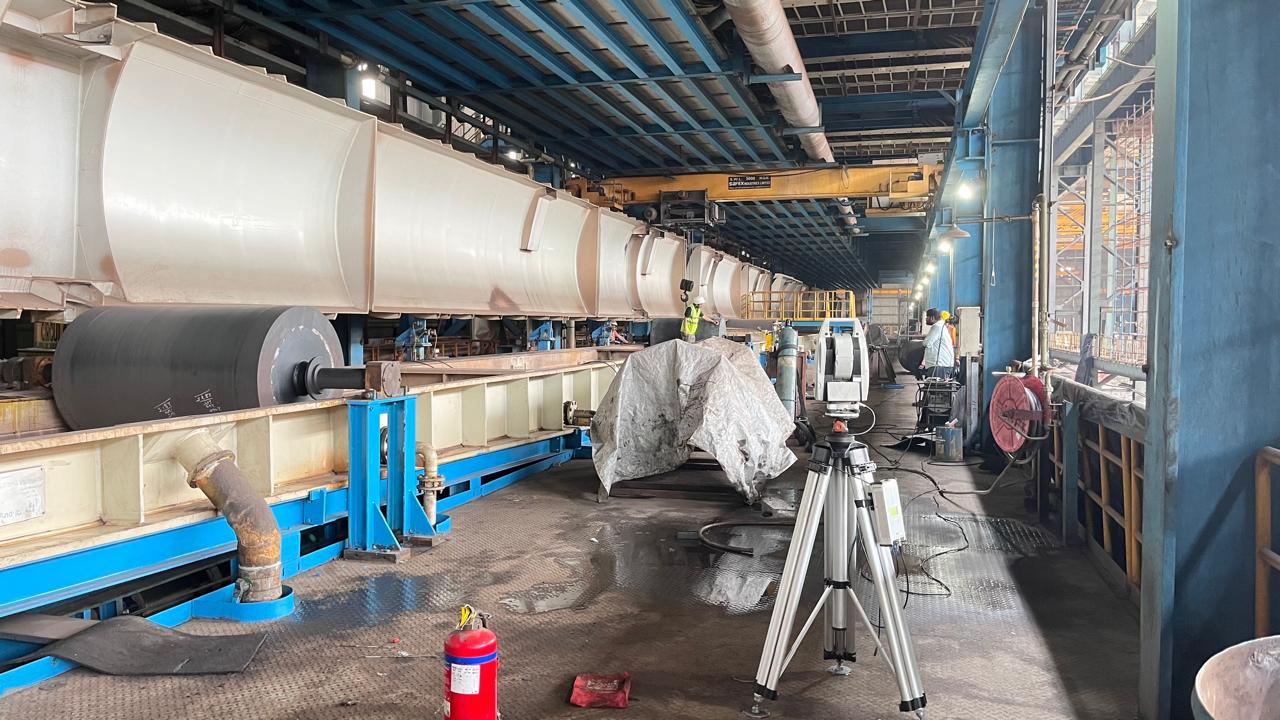
SixD Engineering works across the full path from field capture to engineering deliverables. Our teams support high-density 3D laser scanning, point cloud processing, as-built modeling, CAD documentation, reverse engineering, BIM integration, and digital twin enablement for complex industrial assets.
For a small component, the right answer may be scan-to-CAD and manufacturing drawings. For a congested brownfield unit, it may be an intelligent plant model with isometrics and clash checks. For a facility modernization program, it may be a BIM-ready or digital-twin-ready data foundation that connects geometry with asset information.
If your facility is planning a revamp, shutdown, plant documentation program, or digital transformation initiative, SixD can help define the right scan-to-model output before field capture begins. That early clarity helps teams reduce rework, avoid assumption-based engineering, and turn site reality into reliable project intelligence.
Explore SixD's As-Built Engineering and Digital Intelligence capabilities to plan the right path from point cloud to plant decision-making.
How SixD Helps Plant Teams Decide
SixD Engineering works across the full path from field capture to engineering deliverables. Our teams support high-density 3D laser scanning, point cloud processing, as-built modeling, CAD documentation, reverse engineering, BIM integration, and digital twin enablement for complex industrial assets.
For a small component, the right answer may be scan-to-CAD and manufacturing drawings. For a congested brownfield unit, it may be an intelligent plant model with isometrics and clash checks. For a facility modernization program, it may be a BIM-ready or digital-twin-ready data foundation that connects geometry with asset information.
If your facility is planning a revamp, shutdown, plant documentation program, or digital transformation initiative, SixD can help define the right scan-to-model output before field capture begins. That early clarity helps teams reduce rework, avoid assumption-based engineering, and turn site reality into reliable project intelligence.
Explore SixD's As-Built Engineering and Digital Intelligence capabilities to plan the right path from point cloud to plant decision-making.