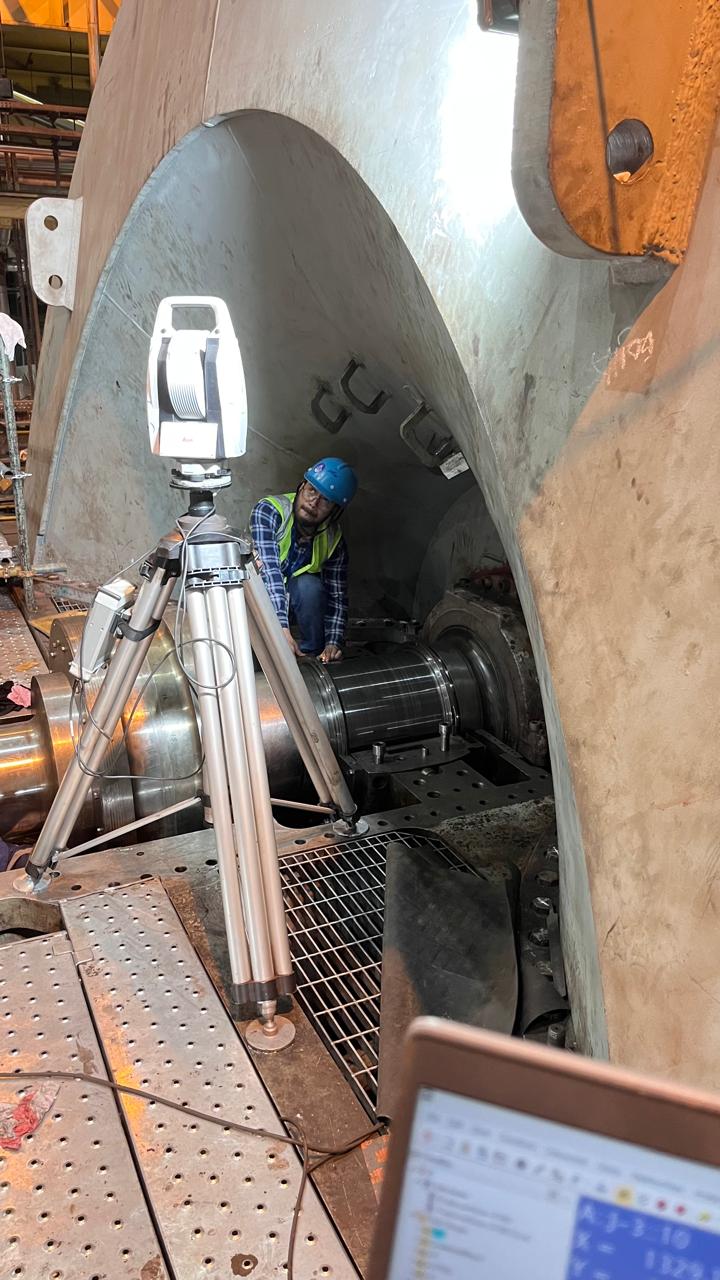
Project Overview
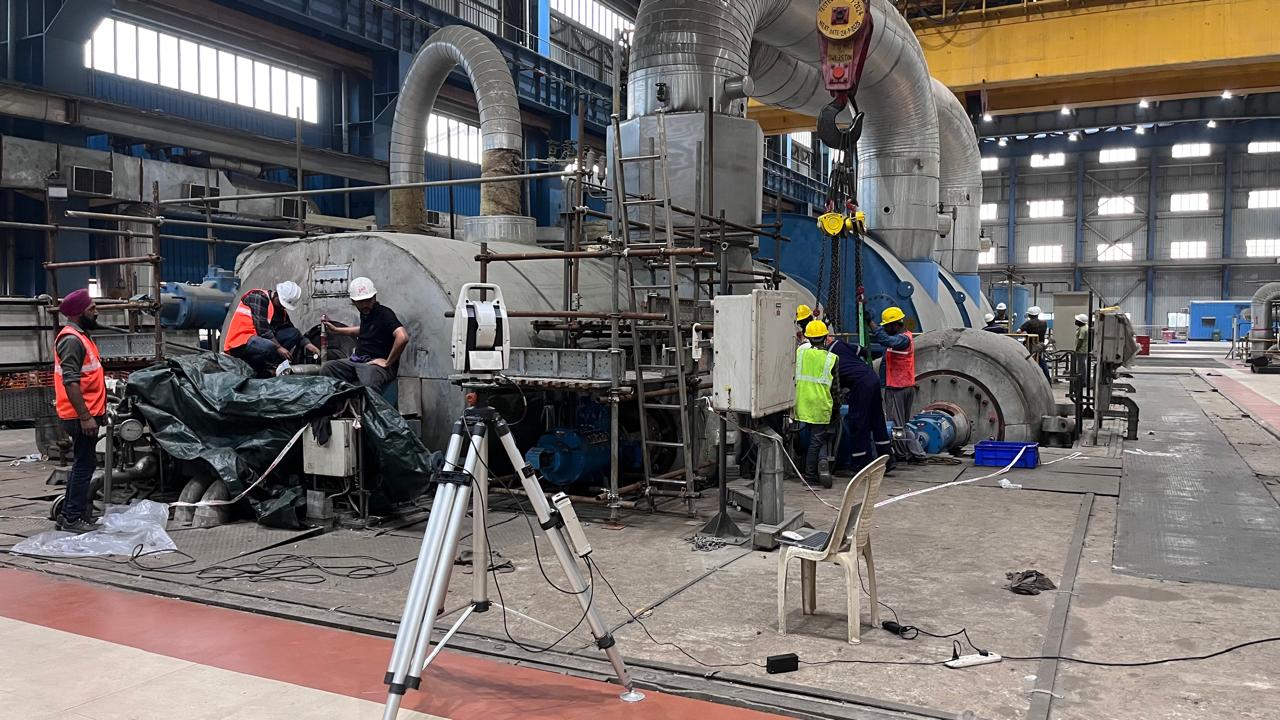
Project: JWS Ratnagiri – Unit 1 (300 MW)
Date of Inspection: 03/04/2026
The primary objective of the inspection was to evaluate the post-overhaul shaft alignment and confirm that the turbine-generator shaft line remains within OEM-recommended tolerances.
Accurate catenary alignment is essential for:
Uniform bearing load distribution
Reduced vibration risks
Minimization of operational stress
Improved turbine reliability and efficiency
Project Overview
Project: JWS Ratnagiri – Unit 1 (300 MW)
Date of Inspection: 03/04/2026
The primary objective of the inspection was to evaluate the post-overhaul shaft alignment and confirm that the turbine-generator shaft line remains within OEM-recommended tolerances.
Accurate catenary alignment is essential for:
Uniform bearing load distribution
Reduced vibration risks
Minimization of operational stress
Improved turbine reliability and efficiency
Inspection Methodology
To ensure precise alignment verification, SixD Engineering used a digital profile mapping method to record shaft elevations at all critical bearing locations.
This methodology enabled:
High-accuracy shaft elevation measurement
Real-time alignment profiling
Comparative analysis with OEM design data
Identification of sagging or hogging conditions
The measured shaft profile was then systematically compared against the original OEM catenary design values to identify any deviations.
Inspection Methodology
To ensure precise alignment verification, SixD Engineering used a digital profile mapping method to record shaft elevations at all critical bearing locations.
This methodology enabled:
High-accuracy shaft elevation measurement
Real-time alignment profiling
Comparative analysis with OEM design data
Identification of sagging or hogging conditions
The measured shaft profile was then systematically compared against the original OEM catenary design values to identify any deviations.
Engineering Analysis
The recorded shaft elevation data was carefully analyzed to evaluate the actual shaft line behavior after the overhauling activity.
Special focus was given to:
Vertical deviation trends
Alignment continuity across bearings
Shaft sagging and hogging behavior
Expected load transfer across the shaft line
This engineering validation ensures that the mechanical system will operate under balanced conditions.
Engineering Analysis
The recorded shaft elevation data was carefully analyzed to evaluate the actual shaft line behavior after the overhauling activity.
Special focus was given to:
Vertical deviation trends
Alignment continuity across bearings
Shaft sagging and hogging behavior
Expected load transfer across the shaft line
This engineering validation ensures that the mechanical system will operate under balanced conditions.
Inspection Results
The catenary inspection results confirmed the following:
The shaft alignment profile is within acceptable limits after overhauling
Observed deviations are minimal and within permissible tolerances
Bearing load distribution is expected to remain uniform
Operational stress and vibration risks are significantly minimized
These findings indicate strong alignment integrity across the turbine-generator shaft line.
Inspection Results
The catenary inspection results confirmed the following:
The shaft alignment profile is within acceptable limits after overhauling
Observed deviations are minimal and within permissible tolerances
Bearing load distribution is expected to remain uniform
Operational stress and vibration risks are significantly minimized
These findings indicate strong alignment integrity across the turbine-generator shaft line.
Project Outcome
Based on the inspection and engineering assessment, the overall catenary condition of the shaft line is found to be satisfactory and aligned with design specifications.
This ensures:
Reliable turbine operation
Reduced risk of bearing overload
Improved vibration performance
Long-term operational stability of the 300 MW unit
Project Outcome
Based on the inspection and engineering assessment, the overall catenary condition of the shaft line is found to be satisfactory and aligned with design specifications.
This ensures:
Reliable turbine operation
Reduced risk of bearing overload
Improved vibration performance
Long-term operational stability of the 300 MW unit
Conclusion
Precision alignment checks such as catenary inspection play a critical role in turbine overhaul projects. By validating shaft profile accuracy and load distribution, SixD Engineering helps clients ensure safe, efficient, and reliable power generation performance.
This successful inspection at JWS Ratnagiri Unit 1 reflects our continued commitment to precision engineering and asset reliability support for critical power infrastructure.
Conclusion
Precision alignment checks such as catenary inspection play a critical role in turbine overhaul projects. By validating shaft profile accuracy and load distribution, SixD Engineering helps clients ensure safe, efficient, and reliable power generation performance.
This successful inspection at JWS Ratnagiri Unit 1 reflects our continued commitment to precision engineering and asset reliability support for critical power infrastructure.
Share Insights